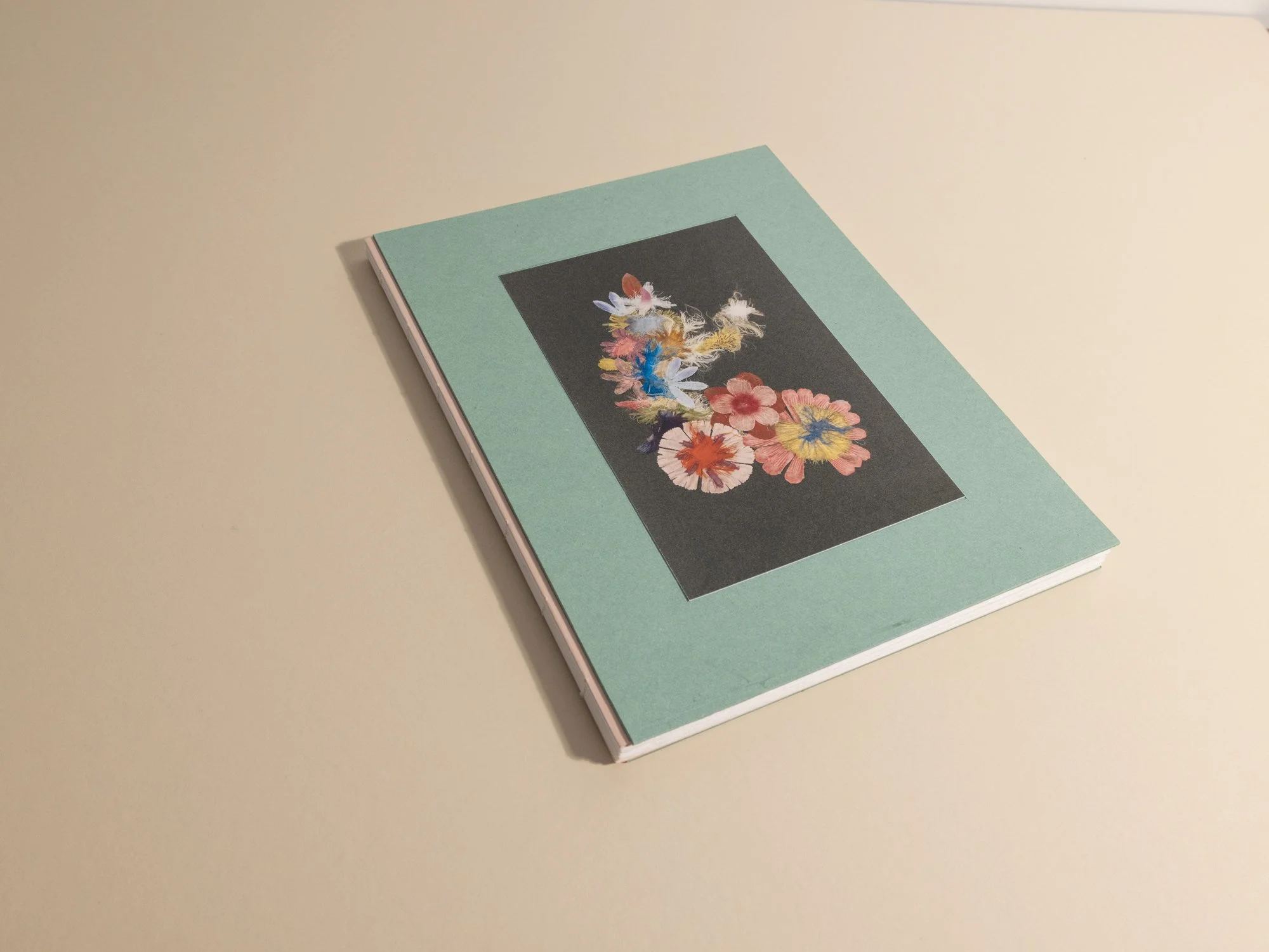
Artist’s Book
9 × 11 in · 64 pp · 4 color plates · 2026
Edition of 15 + 2 AP
MATERIALS
Binding: Coptic Link
Text pages: IJ Asuka 48g Pure White
Color plates: Niyodo Kozo 25g Natural
End papers: Fabriano Tiziano 160g
Cover: Green Millboard
Cover image: Giclée on Hahnemühle Photo Rag
Printed, engraved, and bound by hand, one at a time, in the Hudson Valley
Weeping European Beech Baby Sleep Tonic is a lyrical memoir set primarily in Green-Wood Cemetery, a historic landmark and arboretum that became an unlikely refuge while raising a baby in a cramped city apartment. What began as desperate visits for greenery, fresh air, and quiet places to nurse evolved into a hunt for humor and surprise amidst the pathos of a grievous landscape. Reflecting on my child’s developing needs for silliness and play, I became drawn to the goofy weeping evergreens and whimsical stone carvings I found in the cemetery, as well as wasps’ nests and fleeting bird sightings. Meanwhile, we collected synthetic flowers we found between gravesites, partially destroyed by maintenance equipment and time.
The book integrates cell phone images from the early stroller-pushing days in 2016 with some images from a proper digital camera made around the same time. In the past couple of years, I returned with a large format camera to recreate some of the images that haunted me while I continue to photograph scenes Green-wood has inspired me to love, in other cemeteries and landscapes.
Detached color plates of collaged fake flower petals are tucked into the folds throughout the book, barely discernible through the photographic images printed on thin, transparent pages. I realize they may go unnoticed, but when found, they might mimic the delight of stumbling upon an object holding a sentimental history of entropy, grief, and sunshine.
Artist’s Book
9 × 11 in · 64 pp · 4 color plates · 2026
Edition of 15 + 2 AP
MATERIALS
Binding: Coptic Link
Text pages: IJ Asuka 48g Pure White
Color plates: Niyodo Kozo 25g Natural
End papers: Fabriano Tiziano 160g
Cover: Green Millboard
Cover image: Giclée on Hahnemühle Photo Rag
Printed, engraved, and bound by hand, one at a time, in the Hudson Valley
Weeping European Beech Baby Sleep Tonic is a lyrical memoir set primarily in Green-Wood Cemetery, a historic landmark and arboretum that became an unlikely refuge while raising a baby in a cramped city apartment. What began as desperate visits for greenery, fresh air, and quiet places to nurse evolved into a hunt for humor and surprise amidst the pathos of a grievous landscape. Reflecting on my child’s developing needs for silliness and play, I became drawn to the goofy weeping evergreens and whimsical stone carvings I found in the cemetery, as well as wasps’ nests and fleeting bird sightings. Meanwhile, we collected synthetic flowers we found between gravesites, partially destroyed by maintenance equipment and time.
The book integrates cell phone images from the early stroller-pushing days in 2016 with some images from a proper digital camera made around the same time. In the past couple of years, I returned with a large format camera to recreate some of the images that haunted me while I continue to photograph scenes Green-wood has inspired me to love, in other cemeteries and landscapes.
Detached color plates of collaged fake flower petals are tucked into the folds throughout the book, barely discernible through the photographic images printed on thin, transparent pages. I realize they may go unnoticed, but when found, they might mimic the delight of stumbling upon an object holding a sentimental history of entropy, grief, and sunshine.